
 Sandra Dirks
What dmexco 2026 reveals about the future of visibility
In short: GEO is first and foremost a data issue. AI systems need structured, consistent, and complete product data to recommend products correctly. PIM and DAM are the foundation for this, including image metadata. Through MCP interfaces, this data becomes directly accessible to AI agents. You’ll learn where many companies still have gaps and which three steps you can take now.
dmexco 2026 made one thing clear: digital marketing is shifting away from pure visibility in classic search results and toward visibility in AI systems. Generative Engine Optimization (GEO), the optimization of content and data for AI-powered answer systems such as ChatGPT, Gemini, or Perplexity, is no longer a trend you can wait out. Some companies are already preparing for agentic commerce, meaning purchases made by autonomous AI agents. How quickly this takes hold in each industry remains to be seen. That it will happen is no longer in question.
This brings up an uncomfortable truth: no matter how far off agentic commerce is, AI agents and generative search systems need to capture and understand your products correctly today. If the basics aren’t in place, your products won’t show up at all. Ranking in position 10 is no longer enough to be visible.
That puts an infrastructure question front and center: how well are your PIM, DAM, and product data really set up?
Table of contents
GEO changes the rules: Why product data now determines visibility
Classic SEO focuses on one company, one website, and one ranking. GEO works differently: AI systems distill a single answer from many sources. Products are no longer presented as ten blue links but recommended within one summarized result, or not recommended at all.
For an agent or a generative search system to classify and recommend a product correctly, it needs reliable, structured, and consistent information: clear attributes, accurate technical data, current availability, and clean image metadata. If this information is missing or contradicts itself across channels, a language model will likely improvise, with the risk of producing incorrect or inappropriate details. For visibility, that’s at least as risky as not being found at all.
GEO is therefore first a data quality issue and only secondarily a marketing issue. If you focus on content creation or channel optimization but ignore the underlying data infrastructure, you’re optimizing in the wrong place.
PIM and DAM: The underestimated foundation for visibility in AI systems
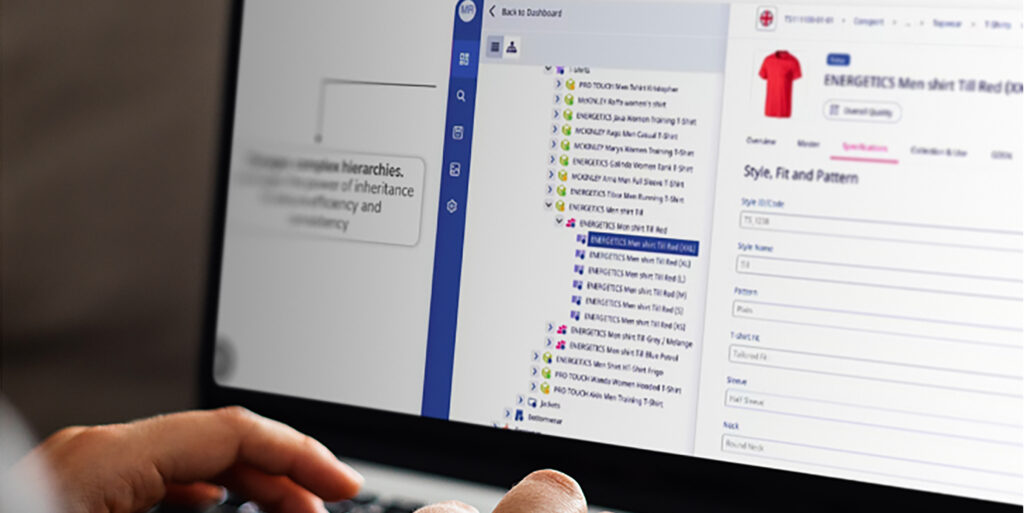
A Product Information Management system (PIM) consolidates product information from different sources and provides it in a structured way to all channels: online shops, marketplaces, catalogs, and, increasingly, AI interfaces. A Digital Asset Management system (DAM) performs the same function for images, videos, and other digital assets, including the metadata that machines need to understand the content.
For a long time, both systems were seen as operational necessities working behind the scenes. With GEO, they become strategic factors for visibility. An agent tasked with evaluating a product doesn’t look at a beautifully designed product page. It looks for well-structured data. The more consistent, complete, and machine-readable this data is, the better the chance that the product will be understood correctly and recommended.
Three areas where many companies still have room to improve
- Data consistency across channels: If product details differ between your website, marketplace, and data sheet, neither customers nor AI systems know which version is correct.
- Structured attributes instead of free text: Product descriptions that exist only as marketing copy are harder for machines to interpret correctly than clearly defined, standardized attributes.
- Image and asset metadata: Images stored without descriptive metadata are effectively invisible to text-based AI systems, regardless of their visual quality.
Platforms such as Bynder on the DAM side and Atamya and Centric on the PIM side address these requirements. They provide central, structured, and channel-ready management of product data and assets, which forms the basis for everything that follows, including GEO.
MCP interfaces: The technical bridge to AI agents
For AI agents to access product data at all, standardized interfaces are required. The Model Context Protocol (MCP) is an open standard that lets AI systems access external data sources, such as a PIM or DAM, in a structured way and in real time, rather than extracting information only from static web pages. For agentic commerce, this is a key prerequisite: an agent shopping on behalf of a customer must be able to reliably access current product data directly, instead of relying on incomplete or outdated information from the open web.
Companies that already ensure their systems are MCP-capable, or at least provide structured, machine-readable interfaces, will have a clear advantage once agentic commerce gains relevance in their industry.
Three first steps toward GEO-ready product data
The pressure is real, but it can be tackled in a structured way. Here are three starting points companies can act on now:
- Assess your data quality: How consistent is your product data across all channels today? Where do contradictions occur?
- Review your PIM and DAM infrastructure: Can your existing systems deliver structured, machine-readable data in the depth you need?
- Prepare for interface requirements: How well is your system landscape prepared for new standards such as MCP?
Are you optimally positioned?
We help you make your systems, interfaces, product data, and digital assets ready for the next generation of search and recommendation. Whenever agentic commerce takes off, GEO is already here.
FAQ
What is Generative Engine Optimization (GEO)?
GEO is the optimization of product data and content for AI-powered answer systems such as ChatGPT, Gemini, or Perplexity, which generate a single, summarized answer from many sources instead of ranking results in a list.
What is agentic commerce?
Agentic commerce refers to shopping processes carried out by autonomous AI agents on behalf of customers, from product research through to completing the purchase, without a human performing each step.
What role does an MCP interface play for GEO and agentic commerce?
The Model Context Protocol (MCP) gives AI systems structured, standardized access to external data sources such as a PIM or DAM. It is therefore a key technical prerequisite for AI agents to reliably access current product data.
Do I need a PIM system to be visible to AI agents?
A PIM system is not strictly required, but it makes it much easier to deliver structured product data consistently across channels, which is exactly what AI systems need to classify and recommend products correctly.
