What is a Lookbook?
A lookbook is a curated visual publication that presents products in a staged, editorial context — rather than showing them in isolation. It combines product information with atmosphere, lifestyle and brand identity. Lookbooks are widely used in fashion, home décor and lifestyle, but increasingly in other industries that market products requiring explanation or emotional engagement. They appear as print publications, digital PDFs or interactive online formats.
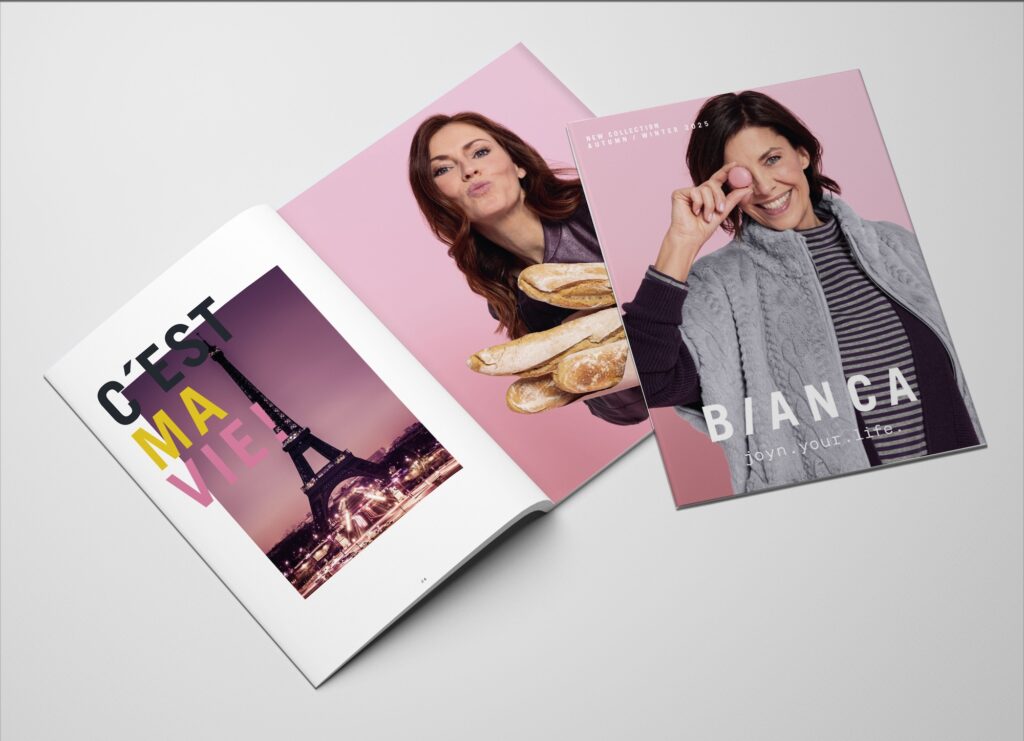
What is a lookbook used for?
A lookbook serves several purposes at once: it inspires, informs and sells — without feeling like a conventional product catalogue. Its strength lies in the combination of visual language and context: products are not just shown, they are made tangible.
Typical use cases include:
- Seasonal collection presentation: New products or collections are staged in the context of a season, a theme or a lifestyle.
- Trade and B2B communication: Lookbooks serve as sales materials for field teams or as a reference for buyers and retail partners.
- Brand positioning: Visual language and design convey brand values that a pure product catalogue cannot deliver.
- Multichannel use: Lookbook content can be repurposed for social media, email marketing, online shops and print.
Lookbook vs. catalogue: what’s the difference?
Lookbooks and catalogues pursue different goals, but frequently complement each other in practice.
A catalogue is primarily information-oriented: it lists products with attributes, prices and technical details — structured, comprehensive and comparable. A lookbook is primarily emotion-oriented: it selects, stages and tells a story. Completeness is not the goal; impact is.
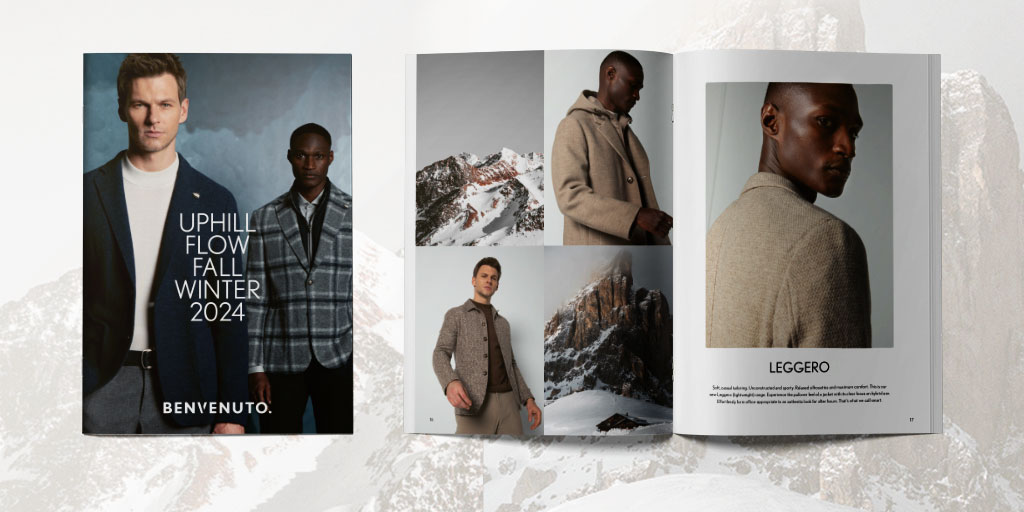
In practice, many companies use both in parallel: the lookbook generates interest and sets the brand scene, while the catalogue provides the detailed information needed for the purchasing decision.
What formats are available?
Lookbooks come in various formats, depending on target audience, budget and communication objective:
- Print lookbook: A high-quality printed product with distinctive tactile qualities, paper stock and finishing. Particularly effective as a direct mailing or trade fair material.
- Digital lookbook (PDF/flipbook): Easy to distribute, linkable and measurable. Well suited for B2B communication and newsletters.
- Interactive online lookbook: Features clickable products, direct shop links, videos or animated elements. Combines inspiration with a direct purchase impulse.
- Social media lookbook: Lookbook content adapted as story formats, reels or carousel posts for Instagram, Pinterest or LinkedIn.
What makes a good lookbook?
The quality of a lookbook depends on several factors:
- Image quality: Professional photography or high-quality CGI visualisations are the foundation. No layout can compensate for poor imagery.
- Consistent visual language: Lighting, styling, colour palette and composition must be coherent throughout.
- Clear design: Layout and typography support the impact of the images without overloading them.
- Relevant product selection: A lookbook does not show everything — it shows the right things for the target audience and the season.
- Brand consistency: Every page must align with the brand identity. CI guidelines are binding, not optional.
Lookbook production: what matters in practice
Producing a lookbook is more demanding than producing a conventional product catalogue, because concept, creative and production must be closely interlinked. Typical challenges include:
- Coordination between creative, marketing and product management teams
- Availability and quality of product imagery at the right time
- Consistency across multiple markets, languages or channels
- Reusability of content for other formats
Laudert supports lookbook production from image concept and photo shoot through design and layout to print data preparation and production. For companies that produce lookbooks regularly and in multiple variants, parts of the process can be automated through system-based workflows — for example by connecting a DAM system for asset management or by using template-based layouts for recurring page structures.
Lookbook and photography: content is the foundation
No lookbook is better than the images it is built on. Professional product photography — whether classic studio shooting, lifestyle photography or CGI visualisation — is the decisive foundation for a lookbook that works.
Laudert produces product images and campaign visuals for lookbooks across a range of industries: from fashion and jewellery to home furnishings and technical products. The images created are not only usable for the lookbook itself, but also for online shops, social media and other channels.
FAQ about Lookbooks
How much does a lookbook cost?
Costs depend heavily on scope: number of pages, number of products, whether a photo shoot is required, whether print and digital versions are needed, and how many language variants are involved. A brief briefing session is the most reliable way to get an accurate estimate.
How long does lookbook production take?
For a straightforward digital lookbook based on existing imagery, a few weeks is realistic. If a photo shoot, extensive concept development or multiple language variants are involved, three to six months should be planned for.
Can I reuse lookbook content for other channels?
Yes — and it is recommended. Planning lookbook content for multiple uses from the outset saves time and budget. Images, copy and layouts can be adapted for social media, newsletters, online shops and presentations.
Do I need a photo shoot for a lookbook?
Not necessarily. If high-quality product images already exist, a lookbook can be developed from them. That said, the strongest lookbooks tend to emerge when the image concept and design are developed together from the start.
Can we support you?
If you are planning a lookbook — whether as a one-off campaign publication or a recurring format — we are happy to advise you: from image concept and photo shoot to the finished print file or interactive online format.