What is Repro (reproduction / reprography) in prepress?
Repro is short for reproduction (sometimes also used as “reprography”) and refers to all processes in prepress used to prepare images and graphics for printing. The goal is consistent, high-quality print results – through optimized color, contrast, sharpness, and correct CMYK output.
In classic print production, “repro” describes the technical and creative preparation of artwork – especially images – before the data goes to press. While the term is used less frequently today, the tasks haven’t disappeared: they’re often labeled data preparation, image editing, or prepress.
Why repro matters in print production
Before files are sent to print, assets must be production-ready:
- correct color mode (typically CMYK rather than RGB)
- adequate resolution
- clean retouching and consistent look
- predictable color through color management
This is especially important in product communication – e.g., catalogs, brochures, print ads, and packaging.
A short history of repro
Repro originated in analog prepress in the 19th and 20th centuries. Images were transferred photographically to film or plates, often using screening/halftoning to reproduce tones and colors in print. With the rise of Desktop Publishing (DTP) and modern image-editing software from the 1980s onward, many repro steps moved into digital workflows.
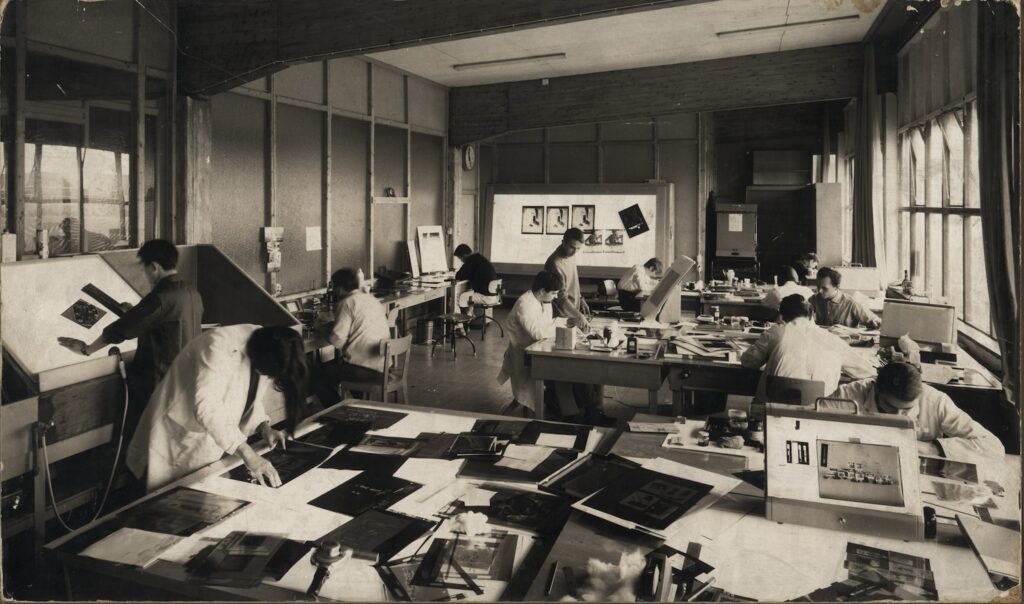
Typical repro steps
- Image editing and color correction: adjust brightness, contrast, and color balance for realistic, consistent results
- Retouching: remove dust, reflections, defects, or unwanted elements
- Color conversion and separations: convert RGB to a print-ready CMYK profile and create separations where needed
- Sharpening and resolution: ensure the correct output resolution (often ~300 dpi for print, depending on format)
Tools and technologies used in repro
Repro relies on a mix of creative and technical tools, for example:
- Adobe Photoshop / Illustrator for image editing and vector work
- Proofing systems to check color before printing
- Color management tools to keep output consistent across substrates and standards
Repro vs. reprography vs. reproduction – what’s the difference?
These terms are often used interchangeably, but they can mean different things depending on context:
- Repro (in prepress): preparing images/graphics specifically for print production
- Reprography: technical reproduction of documents (e.g., scanning, copying, printing) in a broader sense
- Reproduction: the general act of recreating an original (in print, art, or documentation)
FAQ about Repro
Is repro still relevant in modern workflows?
Yes. The term is used less, but the work continues as image editing, data preparation, and prepress..
What’s the main goal of repro?
To ensure images and graphics print cleanly and consistently—especially in color, detail, and sharpness.
Does repro always include RGB-to-CMYK conversion?
Often, yes – at least for print outputs. The correct CMYK profile depends on the print standard and substrate.
How is repro different from final artwork/prepress?
Repro focuses strongly on image preparation and color; final artwork and prepress include broader file checks and production setup.
Can we support you?
Do you need help preparing print-ready assets, aligning color across campaigns, or building a reliable workflow from image editing to press-ready PDFs? With our Print Services, we support you from repro and proofing to smooth production handover.
Related glossary entries
- Prepress – Last checks before print.
- Lithography – Historic print process; “litho” often means prepress today.
- Desktop Publishing (DTP) – Creating print and digital layouts with specialized software.
- CMYK – the subtractive color model used in print production.
- Color Management – the process of ensuring consistent color across devices and channels